
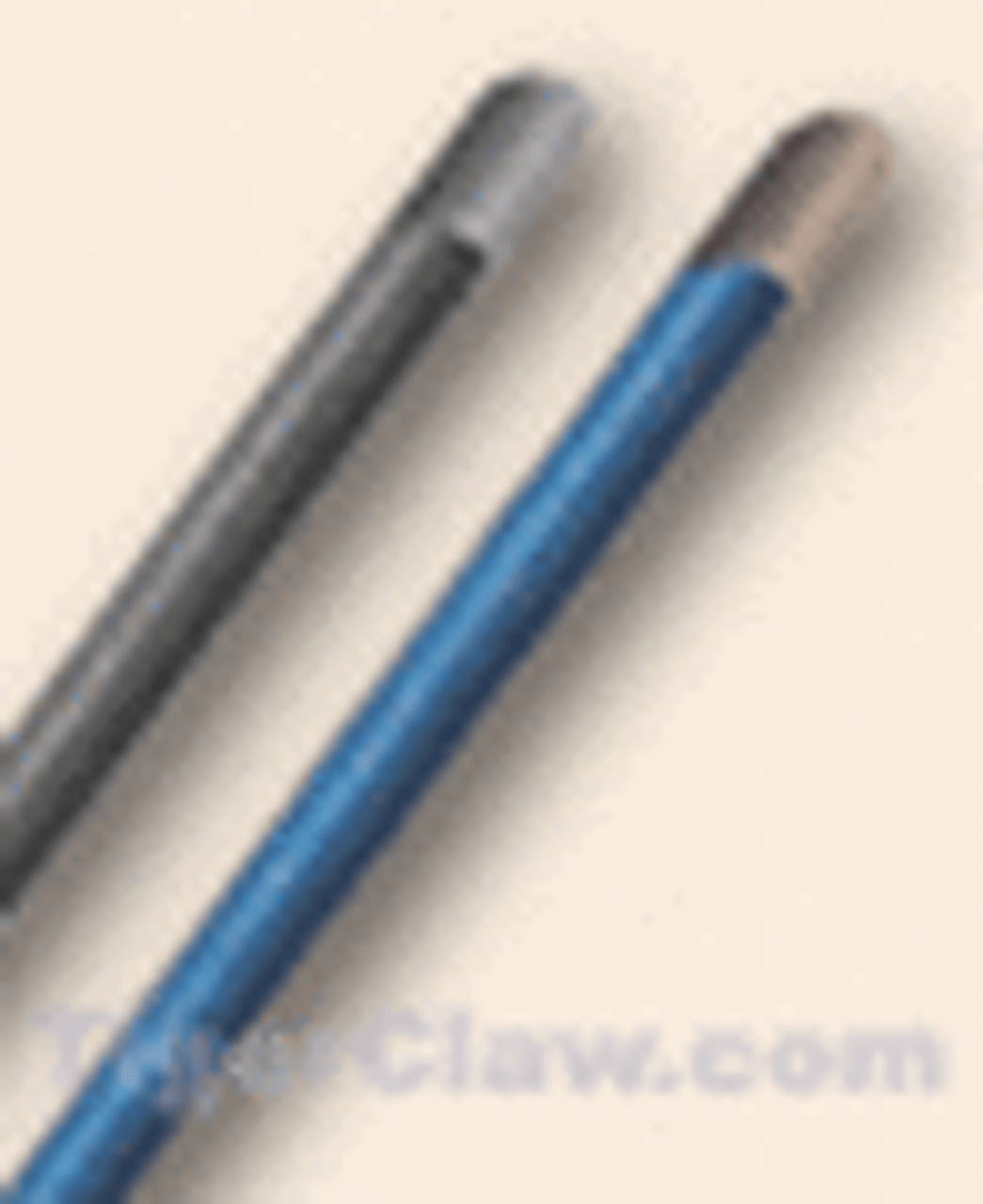
Metal Staff
Metal bo staffs for forms, demonstrations, and competition.
What is a metal staff?
A metal staff is a bo staff made from aluminum or another metal rather than traditional hardwood. Metal staffs are used mainly for forms, demonstrations, and competition, where their light weight and finish suit fast spinning and release techniques.
What are other names for a metal staff?
A metal staff is also called a metal bo, an aluminum bo, an aluminum staff, or a chrome staff.
What options are available for metal staffs?
Metal staffs are available in a range of lengths and diameters, in tapered and straight profiles, and in finishes such as polished chrome, anodized colors, and brushed aluminum. Some models break down into sections for travel.
How does a metal staff work?
A metal staff is held with both hands and gripped at different points along its length to execute strikes, sweeps, blocks, and spins. The practitioner shifts grip and uses the staff's momentum to move it through a form.
Aluminum staffs are typically lighter than hardwood staffs of the same length, and tapered models carry even less weight at the ends. That makes them faster through spins and releases, which is why they are popular for competitive forms. The tradeoff is less mass behind a strike and less tolerance for hard contact.
What benefits does a metal staff provide?
- Will not crack, warp, or splinter the way a wooden staff can
- Holds a consistent weight and balance regardless of humidity or temperature
- Moves faster through spins and releases, particularly in tapered models
- Wipes clean easily and resists moisture damage
- Offers finishes that stand out under lights during demonstrations and competition
Is a metal staff better than a wooden staff?
Neither is better in general; they suit different work. Metal staffs are lighter and faster, hold their balance in any conditions, and are the common choice for competitive forms and demonstrations. Hardwood staffs carry more mass and absorb contact better, which makes them the standard for traditional kata, partner drills, and any training involving staff-to-staff contact. Many practitioners keep one of each. Check your organization's rules before competing, since some traditional circuits require wood.
How do I choose a metal staff?
Length is usually sized to the practitioner, with a bo running somewhere between eyebrow height and the top of the head. Diameter should suit hand size, since a thick shaft slows the release during spins. Tapered staffs are the lighter, faster option for forms built around speed, while straight staffs give more weight in the hands. Finish is largely personal preference, though polished chrome shows fingerprints more than an anodized or brushed surface.
Updated: July 20, 2026
There are no products listed under this category.