
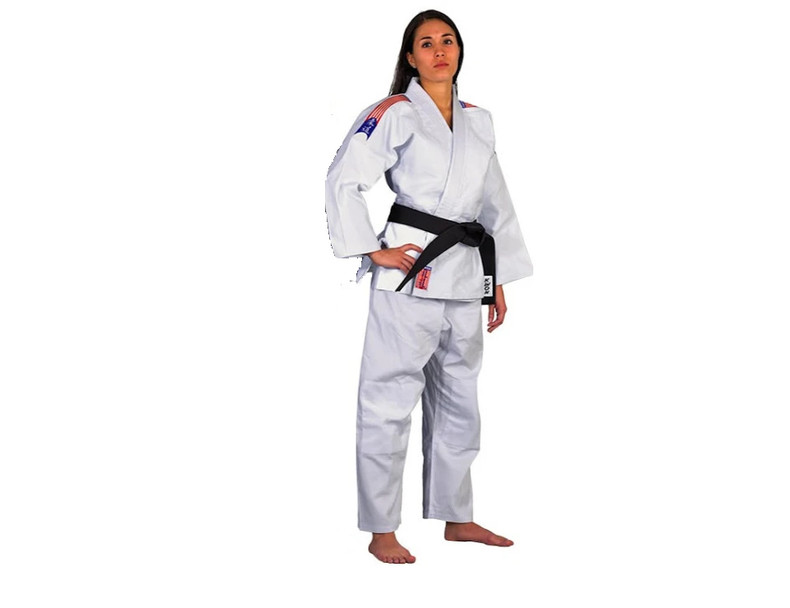
Most people assume a gi is ready to go the moment you pull it out of the packaging. That assumption will cost you comfort, possibly a size, and definitely some frustration during your first few weeks on the mat. The break-in period for a martial arts uniform varies wildly depending on whether you're training hard five days a week, wearing it casually at seminars, or putting it through the kind of abuse that judo randori demands. A stiff 12-ounce cotton canvas karate gi and a single-weave judo uniform are different animals entirely, and they soften on completely different timelines.
For practitioners who want the short answer: the Tokaido Tournament Cut breaks in fastest among heavyweight karate gis because its shorter sleeves and pant legs mean less fabric fighting you during movement. The Tokaido Traditional Cut takes longer, maybe 15 to 25 training sessions, due to fuller coverage and that famously rigid number 10 cotton canvas working against your joints until it finally relents. The Challenger Judo Gi sits in its own category, a heavyweight single-weave cotton uniform reinforced at the shoulders and knees that feels stiff out of the box but yields to grappling stress surprisingly fast because the weave texture loosens with pulling and throwing.
Comparison Table
| Feature | Tokaido Tournament Cut | Tokaido Traditional Cut | Challenger Judo Gi |
|---|---|---|---|
| Material | 12oz #10 Cotton Canvas | 12oz #10 Cotton Canvas | Heavyweight Single-Weave Cotton |
| Break-In Period (Training Use) | 8–15 sessions | 15–25 sessions | 5–12 sessions |
| Break-In Period (Casual/Seminar) | 4–8 weeks | 6–12 weeks | 3–6 weeks |
| Expected Shrinkage | Up to one full size (hot dry) | Up to one full size (hot dry) | Moderate (cool wash recommended) |
| Fabric Feel After Break-In | Crisp with audible "snap" | Soft yet sturdy, drapes naturally | Pliable, textured grip surface |
| Sleeve/Pant Length | Shortened (mid-forearm, above ankle) | Full length (wrist, ankle) | Full length (reinforced knees) |
| Collar Stiffness Post Break-In | Remains firm | Remains firm | Thick but gradually loosens |
| Best For | Kata competition, kumite | Daily dojo training, instruction | Judo, grappling, cross-training |
| Price Range | Premium (Japanese-made) | Premium (Japanese-made) | Budget-friendly |
Tokaido Tournament Cut Ultimate Heavyweight
Break-In Timeline
That first time you put on a Tokaido Tournament Cut, the fabric feels like wearing a sheet of plywood. I suspect most people who've never handled authentic Tokaido karate uniforms are genuinely startled by how rigid the number 10 cotton canvas is out of the box. This is not a defect. It's a feature. The stiffness is what produces that famous audible "snap" during kata, a sound that competition judges absolutely notice.
Expect the jacket to start softening noticeably around session eight if you're training regularly, meaning three to four times a week with genuine sweat output. The sleeves, being shorter and therefore subjected to repeated elbow bending, loosen before the torso panel does. By session twelve to fifteen, the gi starts to feel like it was made for your body specifically, conforming to your shoulder line and the natural fold at your waist.
For people using this gi casually, at weekend seminars or monthly club events, the timeline stretches considerably. You might be looking at four to eight weeks of calendar time before the cotton canvas really relents. Cold wash cycles help the fabric relax without triggering shrinkage, but they slow the softening process compared to what sweat and repeated physical stress accomplish.
Shrinkage and Fit
Never. Put. This. In. A. Hot. Dryer. Unless you deliberately want to lose up to a full size. The Tokaido Tournament Cut already runs slim, with shorter sleeves and pant legs by design, and practitioners on forums consistently mention needing to order a half size up. Shrinkage on the first warm wash can be dramatic, half an inch to a full inch on sleeve length. Air drying is the only responsible method here.
Oddly enough, some karateka intentionally shrink their Tournament Cut gi slightly to get a tighter, more tailored competition look. That's a calculated risk, and you should only try it if you've already confirmed you have room to lose.
Best Use Cases
This is a competition kata and kumite gi through and through. The shortened limbs make techniques look sharper to judges, and the reduced fabric gives opponents less to grab during sparring. Practitioners who travel to tournaments, WKF-sanctioned or otherwise, tend to treat their Tournament Cut as their "best suit," reserving it for competition day while training in something less precious.
Tokaido Traditional Cut Ultimate Heavyweight
Break-In Timeline
The Traditional Cut shares identical fabric with the Tournament Cut, that same legendary number 10 cotton canvas, but the full-length sleeves and pant legs mean substantially more material resisting your movement during the break-in window. Where the Tournament Cut might feel workable by session ten, the Traditional Cut often requires fifteen to twenty-five sessions of genuine training before the jacket drapes instead of crinkles.
The collar on both Tokaido cuts is multi-stitched and deliberately stiff, designed to hold its shape through years of use. During break-in, that collar can feel like it's fighting your neck. Around session twenty, you'll notice it starts to curve with your body's contour rather than against it.
For instructors who wear their gi daily but aren't necessarily doing high-intensity sparring every class, the break-in can take six to twelve weeks of real calendar time. Teaching doesn't generate the same fabric stress as full-contact training, so the cotton softens more gradually.
Shrinkage and Fit
Same rules apply as the Tournament Cut. Cool water washing and air drying are non-negotiable if you want to preserve the intended fit. The Traditional Cut already runs full-length, so any shrinkage is more immediately noticeable on pant hems and sleeve cuffs. Some users have noted that Tokaido's standard-waisted pants feel restrictive compared to higher-waisted options from brands like Shureido or Kamikaze, which is worth considering if you carry weight in your midsection.
Best Use Cases
Daily dojo training. Instruction. The gi you wear when you're not trying to impress judges but instead want to look and feel like someone who takes their art seriously. The Traditional Cut is the "daily driver" for Shotokan practitioners, and its fuller silhouette commands a certain presence during demonstrations. It's also the more forgiving option for self-defense drills where you're moving through a wider range of positions than competition kata typically demands.
Challenger White Judo Gi

Break-In Timeline
Completely different animal. The Challenger uses a single-weave cotton construction rather than canvas, which means the fabric structure is inherently more pliable even before you start training in it. Out of the package, it still feels stiff, particularly at the reinforced shoulders and quilted areas, but the weave itself begins loosening within five to twelve sessions of judo practice.
Grappling accelerates break-in dramatically. Every time someone grabs your lapel and executes an osoto gari, they're mechanically stretching the cotton fibers in ways that striking practice simply doesn't replicate. Randori is, in a very real sense, the fastest break-in method available.
The reinforced knee panels take the longest to soften because the extra padding resists compression. Groundwork (ne-waza) helps here, but expect those knee areas to remain noticeably stiffer than the rest of the pants for the first month.
Shrinkage and Fit
The Challenger spans a massive size range, from 00000 (fitting children around 3 feet 1 inch) all the way to size 7 (fitting adults up to 7 feet tall). Smaller sizes feature both a drawstring and elastic waistband, which helps younger practitioners dress independently. Size 2 and above use a traditional drawstring only.
Shrinkage is moderate with cool washing. Not as severe as the Tokaido canvas, but still enough that you shouldn't gamble with hot water if you're borderline between sizes. The single-weave construction is less dense than double-weave options, so it dries faster and responds less dramatically to heat, but the tradeoff is that it won't last as long under extreme grappling stress as something like a KuSakura 890 g/m² double-weave, which is the gold standard if you're chasing maximum durability and grip stability on the mat.
Best Use Cases
Judo training, jiu-jitsu cross-training, and any scenario where opponents are grabbing, pulling, and throwing you repeatedly. The reinforced shoulders withstand hundreds of pounds of pulling force, and the quilted construction distributes stress across seams that would otherwise fail on a striking-focused gi. At its price point, it's genuinely hard to beat as a workhorse uniform, and as one reviewer put it, "it's a good gi, what else can I say."
Pros and Cons
Tokaido Tournament Cut:
- Exceptional "snap" for kata visibility and audible crispness
- Shortened limbs reduce grab points during kumite
- Premium Japanese craftsmanship with the number 10 canvas designation
- Runs slim and short; may require tailoring or sizing up
- Expensive relative to non-Japanese alternatives
- Heavy and can overheat during intense summer training
Tokaido Traditional Cut:
- Full coverage provides classic dojo presence
- Same legendary canvas as the Tournament Cut
- Wears like iron once broken in
- Longest break-in period of the three
- Standard waist on pants feels restrictive for some body types
- Becomes clingy and uncomfortable when saturated with sweat
Challenger Judo Gi:
- Budget-friendly entry into heavyweight judo uniforms
- Reinforced shoulders and knees extend lifespan significantly
- Wide size range accommodates children through very tall adults
- Not designed for striking arts; feels clunky for kata
- Single weave sacrifices longevity compared to double-weave alternatives
- Less prestige factor than premium Japanese brands
How Does Material and Weave Affect Break-In Duration?
The fundamental variable is fiber density. Tokaido's number 10 cotton canvas packs fibers tightly into a smooth, rigid sheet that resists deformation. This is why it produces that signature crispness, but it's also why breaking it in takes genuine effort. The canvas essentially needs to be micro-stressed thousands of times before the fibers begin sliding past each other smoothly.
Single-weave judo fabric, like the Challenger uses, has a looser interlocking pattern with visible texture. The gaps between woven threads allow the fabric to flex and stretch more readily from day one. Double-weave, by contrast, layers two weave patterns together for maximum rigidity and grip resistance, which is why a heavy double-weave judogi from a manufacturer like KuSakura can feel remarkably manageable in competition despite its weight, smart fabric engineering distributes the stiffness across a broader surface area.
Cotton weight matters too. A 12-ounce canvas is denser per square yard than a single-weave judo fabric of equivalent thickness, meaning the karate gi will always require more mechanical stress to soften. People sometimes confuse "heavy" with "stiff," but they're separate properties. A heavy gi can break in soft. A medium-weight gi with tight weave can stay rigid for months.
Climate and washing methods play a supporting role. Practitioners in humid environments find their gis absorb ambient moisture between sessions, which keeps fibers slightly more pliable. Those training in dry, arid climates or air-conditioned dojos may notice a longer break-in curve because the cotton dries completely between uses and returns to its rigid baseline.
Which Gi Breaks In Best for Your Training Style?
If you train primarily in striking arts, karate, taekwondo cross-training, or any discipline where fabric drape and "snap" matter more than grip resistance, the Tokaido line is where serious practitioners eventually land. The Tournament Cut is the faster break-in if you're attending competitions regularly and need a gi that conforms quickly. The Traditional Cut is the better long-term investment for instructors and daily practitioners who can afford the patience of a longer break-in period, because once that canvas softens, it develops a "second skin" quality that no lighter-weight gi can replicate.
For grapplers, judoka, and anyone whose training involves being grabbed and thrown, the Challenger offers the most practical path. Its break-in is the fastest of the three because grappling mechanics do the work for you, and the reinforced construction means you're not sacrificing durability for comfort. It's a no-nonsense working uniform.
Cross-trainers face the hardest choice. If you split time between striking and grappling, owning one of each isn't extravagant, it's practical. A Tokaido for kata days and a Challenger for randori days means each gi gets used in the context it was engineered for, and both will last considerably longer than a single "compromise" uniform that does neither job particularly well.
FAQ
How many washes does it take to break in a Tokaido gi? Roughly five to eight cold-water washes contribute meaningfully to softening, but washing alone won't do it. Physical training in the gi is what breaks the fibers in. Think of washing as maintenance, not the primary break-in method.
Can I speed up gi break-in without damaging the fabric? Wearing the gi during light stretching or home kata practice between formal training sessions adds low-stress flex cycles that accumulate over time. Avoid hot water or mechanical dryers as shortcuts, because you'll trigger shrinkage before the fabric has a chance to relax naturally.
Is the Challenger Judo Gi suitable for karate training? Technically you can wear it, but the textured weave and thick collar make it cumbersome for clean striking technique. It's engineered for grappling physics, not the rotational snap of punches and kicks.
Do heavyweight gis get lighter after break-in? They don't lose actual weight, but they feel lighter because the fabric stops resisting your movement. A broken-in heavyweight gi moves with you instead of against you, which changes the perceived burden dramatically.
Should I size up for a Tokaido gi to account for break-in shrinkage? If you plan to follow proper care instructions, cool wash, air dry, your standard size should be fine. If there's any chance you'll accidentally machine-dry it, ordering a half size up gives you a safety margin that many experienced practitioners recommend.